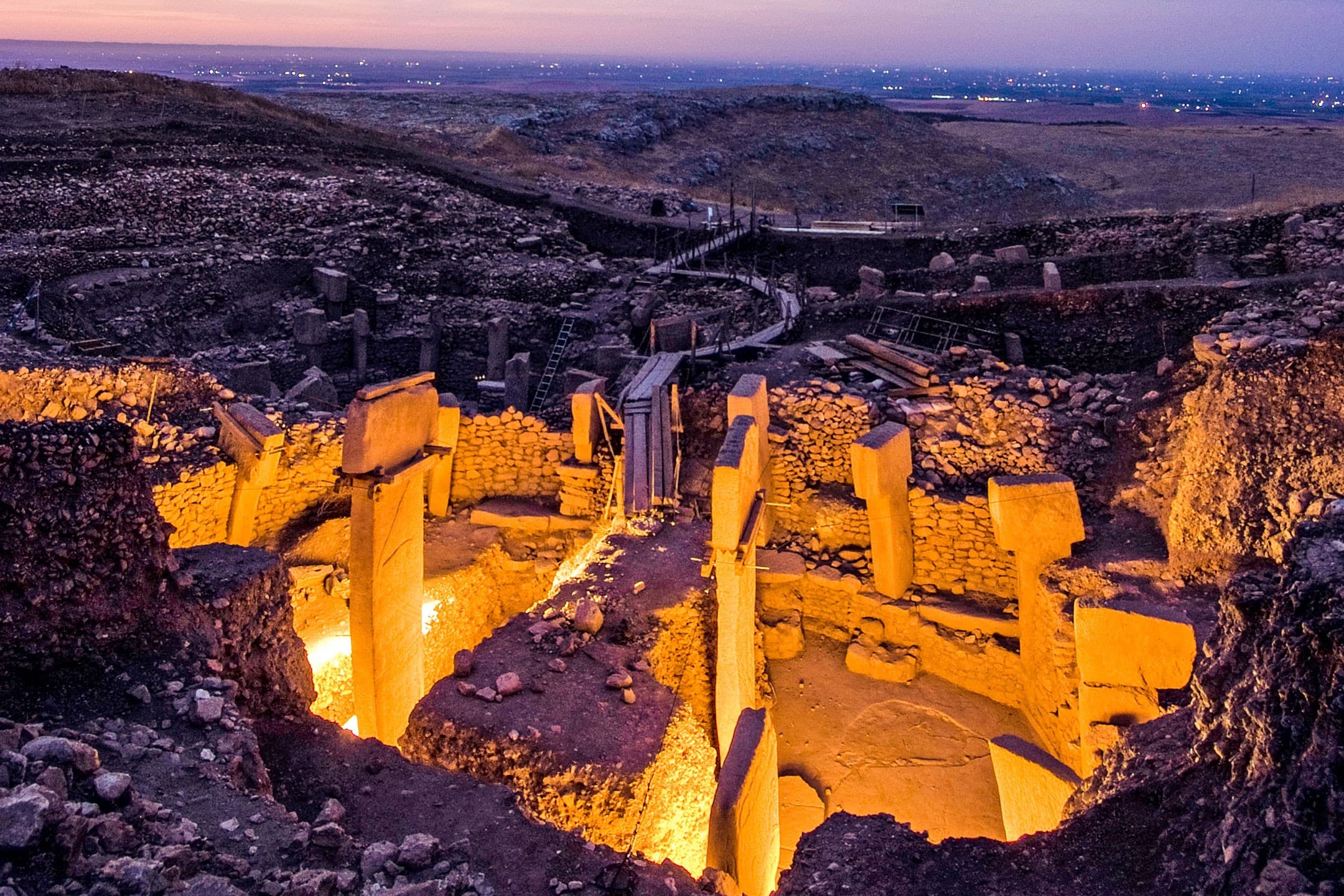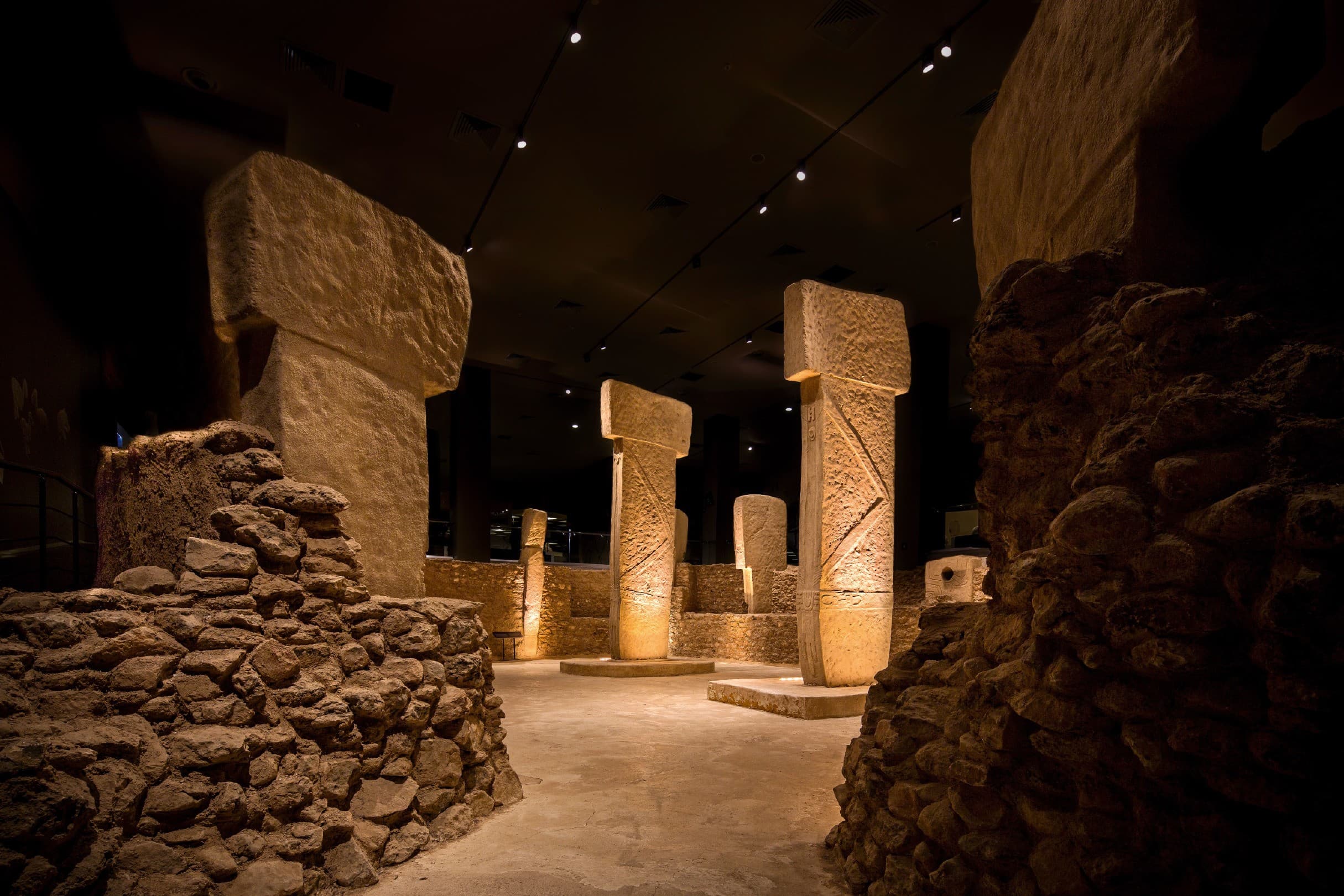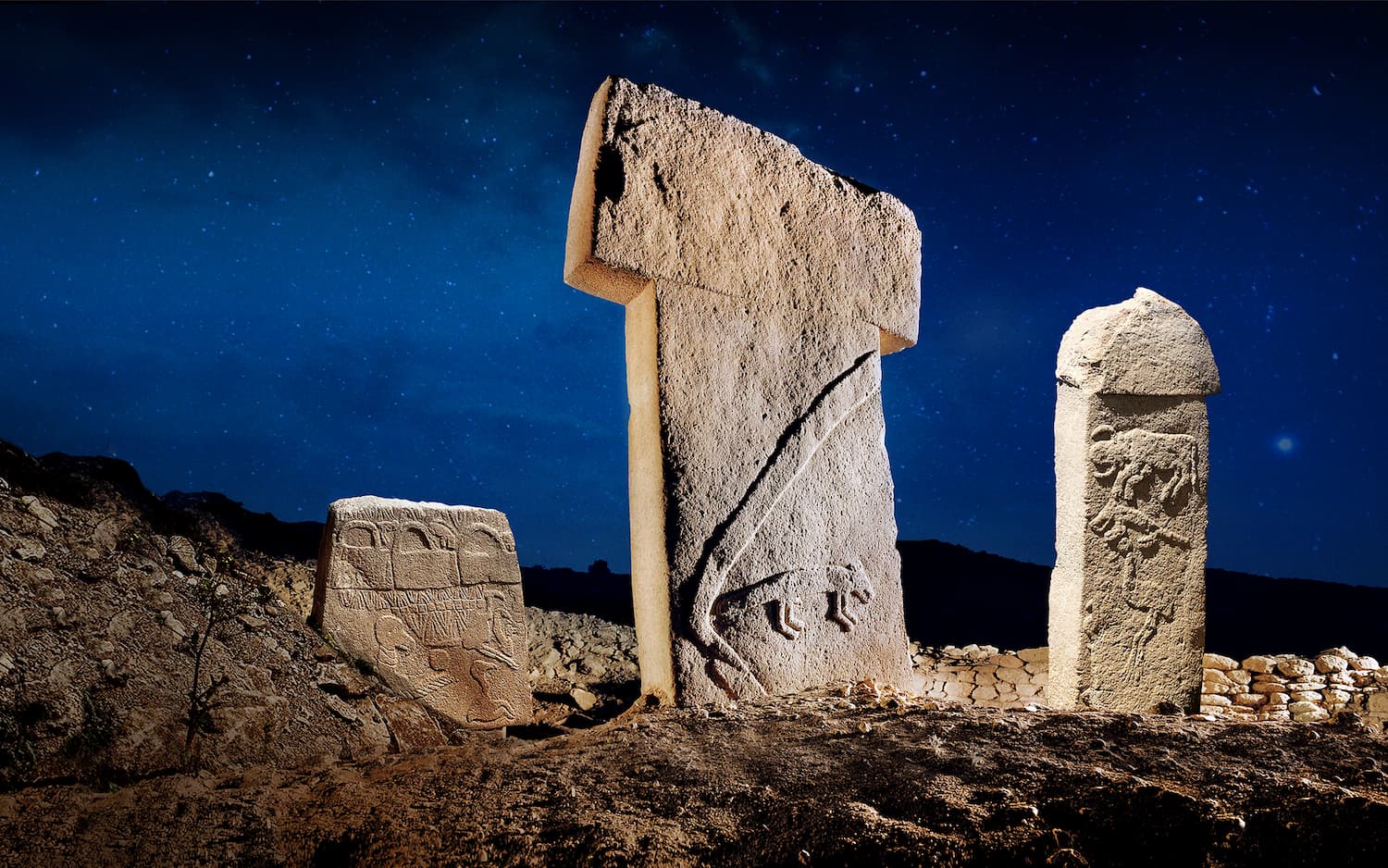
While Göbeklitepe has captured the world's imagination, a new discovery just 35 kilometers away is shedding fresh light on the Neolithic period. Karahantepe, often called "Göbeklitepe's sister site," features similar T-shaped pillars and circular enclosures, but with unique characteristics that suggest a slightly different function or perhaps a different era of the same culture.
A Focus on Human Imagery
One of the most striking differences at Karahantepe is the prevalence of human figures. While Göbeklitepe is dominated by animal iconography, Karahantepe features more anthropomorphic carvings, including a remarkable 2.3-meter-high human head emerging from the rock.
The site also contains a large number of "phallus-shaped" pillars, which has led some archaeologists to speculate that it may have served as a site for initiation rituals or rites of passage. The layout seems to guide visitors through a specific procession, further supporting the idea of ritualistic use.
The Taş Tepeler (Stone Hills) Project
Karahantepe is just one of 12 sites being excavated under the "Taş Tepeler" project. This ambitious undertaking aims to uncover the full extent of this Neolithic culture. It’s becoming increasingly clear that Göbeklitepe was not a lone anomaly but part of a vast, interconnected network of spiritual centers that covered the region.